The Return of the Crown: Why Iran’s Monarchy Still Haunts the Islamic Republic

Nearly half a century after the 1979 Revolution, the image of Iran’s monarchy remains surprisingly powerful in the country’s political imagination. Far from being merely a historical memory, it has become an active symbol of opposition to the Islamic Republic, reemerging with particular force during the 2026 protests. For many observers, this symbolic return reveals not only nostalgia for an idealized past, but above all the search for a clear alternative to the theocratic system that has governed Iran for decades.
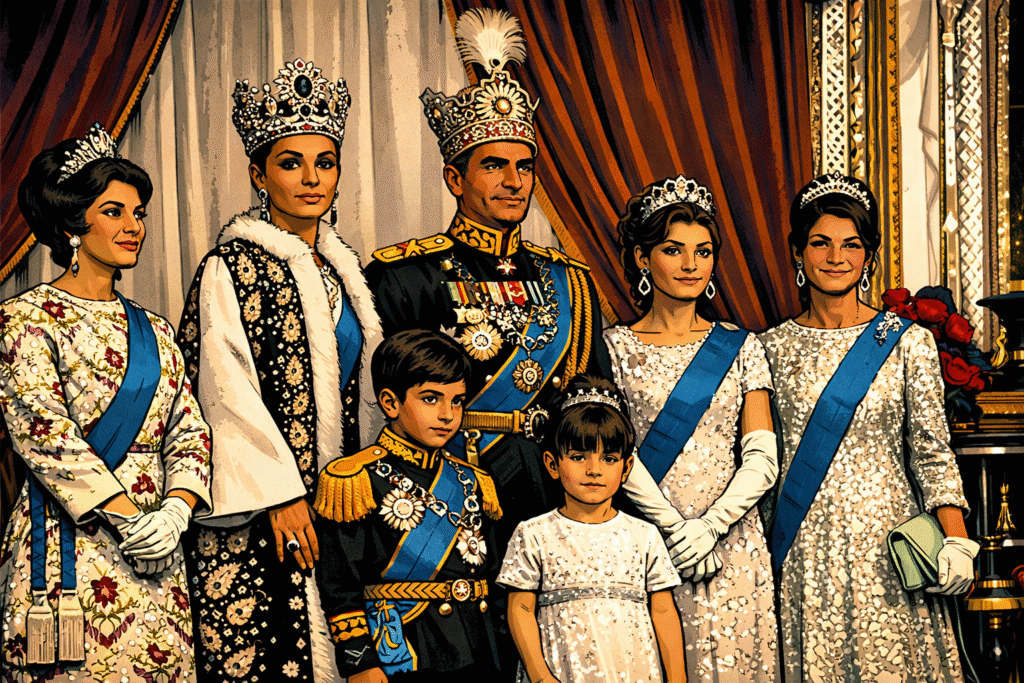
The monarchy, embodied in the memory of Mohammad Reza Pahlavi’s reign and today in the figure of his son, Crown Prince Reza Pahlavi, has come to represent more than just a form of government. For part of the population, it has become a symbol of normalcy, stability, and openness to the world, in contrast to the current regime, often associated with isolation, restrictions, and economic hardship. Even among young people who never experienced the monarchical period, the idea of an integrated, less controlled, and more predictable Iran has gained strength as an alternative narrative.
Since its founding, the Islamic Republic has built its legitimacy on the rejection of the former regime, portraying it as authoritarian, subservient to the West, and detached from the people. Over the years, however, economic crises, social tensions, and limitations on civil liberties have eroded the system’s ability to provide prosperity and cohesion. In this context, the monarchy has been reevaluated — not necessarily as a perfect model, but as a symbolic counterpoint to the present, a reminder that another political order is possible.
The role of the Iranian diaspora has been decisive in this process. Millions of Iranians living in the United States, Europe, and other countries kept the memory of the monarchical period alive through cultural associations, media outlets, events, and social networks. These communities, often freer to express political positions, transformed the monarchy into an identity marker and into an alternative narrative to the official version taught inside Iran. Over time, this discourse crossed digital borders and increasingly reached Iranian youth.
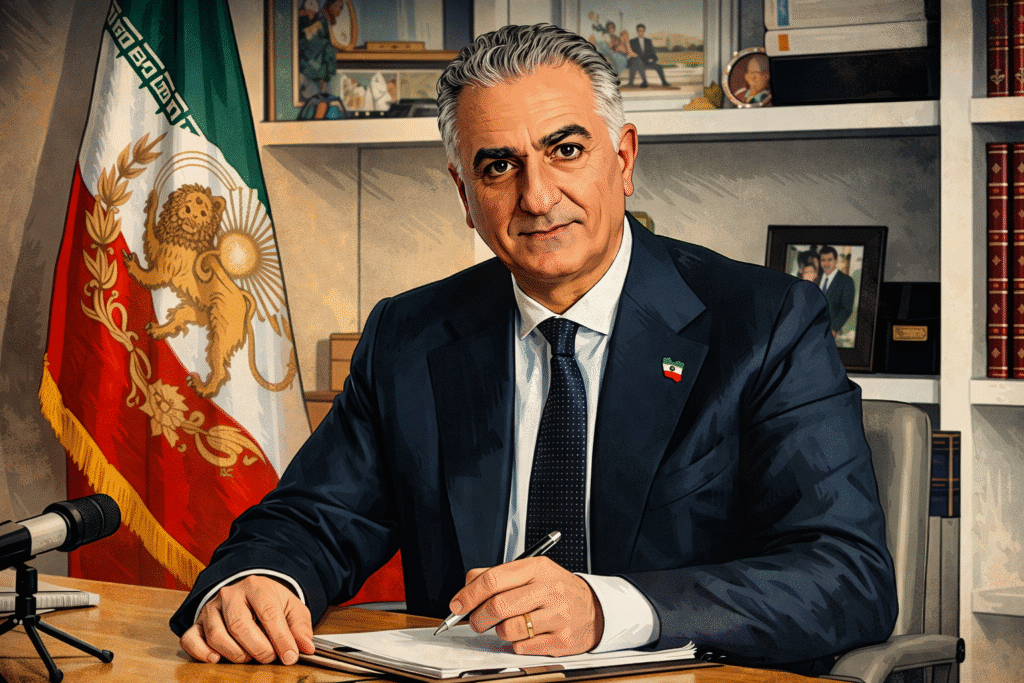
During the 2026 demonstrations, the monarchy ceased to be merely a subject of debate and became a visible symbol on the streets. Slogans calling for the return of the monarchy, images associated with the Pahlavi family, and messages of support for the crown prince circulated widely, both in person and across social media. For many protesters, these references do not necessarily indicate a literal desire to restore the old regime, but function as a clear political language: a frontal rejection of the Islamic Republic and a demand for a deep rupture with the current model.
This symbolic use explains why the monarchy “haunts” the ayatollahs. It represents the ghost of a past the regime tried to erase, but which returns as a legitimate political alternative in the eyes of a growing segment of the population. Unlike other opposition currents, which are fragmented or ideologically diffuse, the monarchy offers a simple, recognizable, and easily communicable image. It is a symbol that crosses generations, connects the diaspora with the country’s interior, and serves as a point of convergence for diverse social frustrations.
For the regime, this is particularly troubling because it shifts the debate away from reforms, the economy, or specific policies, and toward the very legitimacy of the system itself. By invoking the monarchy, protesters are implicitly saying that the problem lies not only in how Iran is governed, but in who governs it and under what model of power.
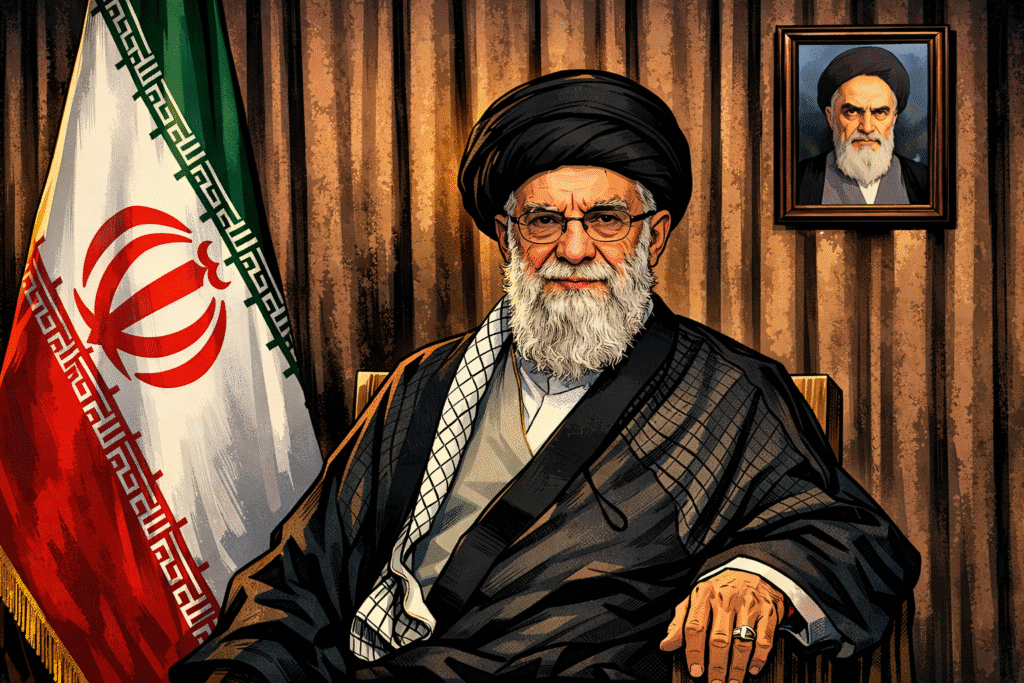
Thus, in 2026, the monarchy has reemerged less as a detailed political project and more as a powerful symbol of rejection of the present and aspiration for a different future. This symbolic return explains why it remains so powerful — and why it continues to deeply unsettle the ayatollahs.








Publicar comentário