Why Venezuela Wants to Leave the ICC

The decision of the Venezuelan National Assembly — controlled by the government — to vote unanimously to revoke the ratification of the Rome Statute, the founding document of the International Criminal Court (ICC), marked yet another chapter of tension between the Venezuelan state and the international bodies responsible for monitoring human rights. Although the legal effects of such a revocation still depend on formal procedures and deadlines established by the statute itself, the political gesture in and of itself had a strong symbolic and narrative impact, revealing both the government’s perception of threat and its intention to reaffirm sovereignty in the face of external pressure.
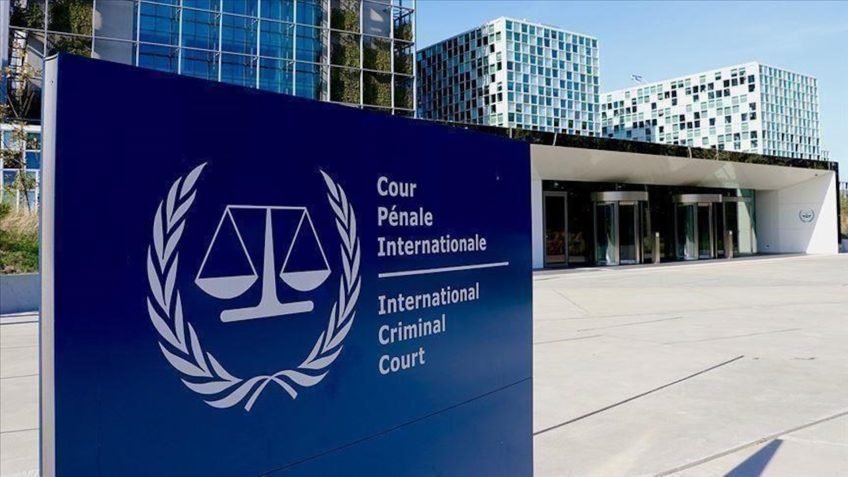
The decision comes in a context in which the ICC has been conducting, since 2021, a preliminary investigation—later authorized to move forward—into possible crimes against humanity committed in Venezuela. For the government, this investigation represents an unacceptable intrusion, a direct challenge to its legitimacy, and an instrument of political pressure used by international actors. Thus, the revocation of the ratification emerges narratively as an act of resistance: the Assembly, aligned with the Executive, seeks to convey the idea that the country will not accept being judged by bodies it considers biased or influenced by foreign powers.
In the domestic debate, pro-government lawmakers presented the gesture as a defense of national sovereignty. The official narrative maintains that multilateral institutions, once seen as guarantors of global justice, have become tools of pressure against governments that break with traditional alignment to the major Western powers. Within that worldview, withdrawing from the ICC would be a way to prevent geopolitical pressure from disguising itself as judicial proceedings. The unanimity of the vote, however, reveals not only internal cohesion but also the reality of a Parliament with no effective opposition, after years of institutional restructuring that drastically limited political pluralism.
On the international stage, the decision was received as a clear attempt to escape international jurisdiction. Human rights organizations, foreign governments, and legal experts emphasized that the revocation does not automatically prevent the ICC from continuing its investigations. This is because the Rome Statute stipulates that a country’s withdrawal only takes effect one year after formal notification and, even then, does not affect the Court’s ability to judge crimes committed during the period in which the state was a signatory. In other words, even if Venezuela officially leaves the ICC, previously committed acts remain under scrutiny.
Beyond the legal disputes, the episode fits into a broader political strategy of the Venezuelan government. Since the intensification of sanctions and diplomatic isolation, Caracas has increasingly emphasized the discourse of self-determination, seeking closer ties with allies such as Russia, China, and Iran, while distancing itself from international structures dominated by Western countries. The revocation of the ratification can thus be read as a calculated move: the government signals firmness to its internal supporters, pressures the ICC, and reinforces a narrative of resistance in the face of “external aggression.”
In narrative terms, the government attempts to transform vulnerability—being the target of an international investigation—into a demonstration of nationalist strength. The Assembly, in this sense, functions as a stage for a political gesture: by voting unanimously for revocation, it creates the image of a country united against an external threat, even though this unity stems from a deeply asymmetric political environment. In official rhetoric, it is about protecting the homeland; in critical interpretations, it is about shielding the regime from international accountability mechanisms.
For international observers, however, the move reinforces concerns about the state of Venezuelan institutions and about the future of human rights in the country. Withdrawing from global oversight bodies makes it even more difficult to obtain mechanisms of justice for victims of abuses and increases Venezuela’s institutional isolation at a moment of severe economic and social fragility.
Thus, the revocation of the ratification of the Rome Statute, although presented as an act of sovereignty, is also a symptom of a deeper confrontation between the Venezuelan government and the international accountability structures. It heightens narrative tensions, reshapes alliances, and once again exposes the complex relationship between domestic power, international politics, and global justice. The episode therefore becomes more than a legal gesture: it is a calculated move within a constantly shifting geopolitical chessboard.








Publicar comentário