Iran Under Pressure: Protests, Internet Blackouts, and the Return of the Monarchy Debate

The desperation of the Iranian regime became visible when, amid the escalation of demonstrations, authorities ordered a near-total nationwide internet shutdown and publicly announced that participants who set public buildings on fire may be sentenced to capital punishment. This measure — extreme and rare even by Iranian standards — has been interpreted by analysts as a sign that the government sees the current wave of protests not merely as an isolated disturbance, but as a direct threat to its own survival.
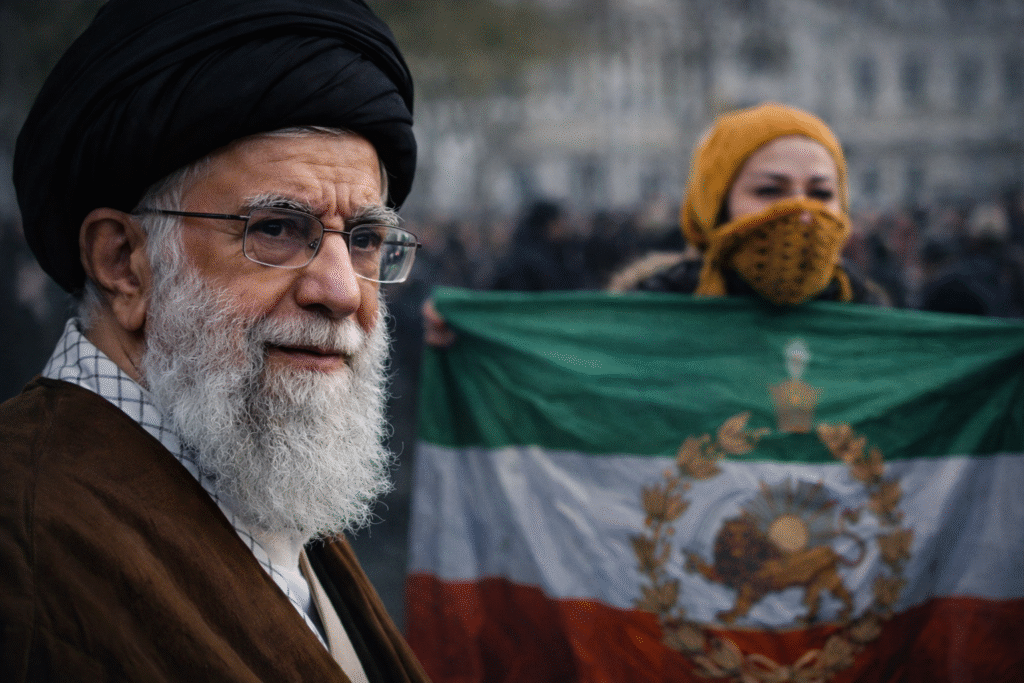
What makes this cycle of mobilization particularly symbolic is the way it began. Unlike previous protests, which generally emerged from political agendas or clashes involving cultural and religious issues, the first demonstrations came from mobile phone vendors and small business owners in the technology sector. Abrupt price increases, import difficulties, currency instability, and restrictions on digital platforms created an environment in which this group — highly dependent on connectivity and the circulation of goods — began to openly express its dissatisfaction. Within hours, what started as a localized economic grievance spread to other professional categories and cities, turning into a nationwide movement.
As the protests grew, streets in several provinces began to echo slogans that went beyond economic complaints, striking at the very heart of Iran’s political system. In various locations, chants calling for the overthrow of the ayatollahs and the return of the monarchy were heard — something that for decades had been considered virtually unthinkable in Iranian public space. This shift in tone reveals that the current movement is not merely a call for limited reforms, but an open challenge to the governing model established since 1979.
Another new and decisive factor is the role of Crown Prince Reza Pahlavi, son of Iran’s last shah. Living abroad, he has made intensive use of social media to encourage mobilization, give visibility to the protests, and articulate messages advocating a deep political transition. His digital presence serves as a symbolic point of convergence for part of the protesters, especially younger generations who did not experience the monarchical period but see in the heir a symbol of an alternative to the current regime. This combination of external symbolic leadership and internal mobilization creates an unprecedented scenario for Tehran.
The official reaction, however, has been one of hardening. The Iranian government accuses protesters of seeking to please the U.S. government and other Western countries, classifying the mobilizations as part of an external strategy to weaken Iran. Regime spokespeople have stated that there will be no concessions and that any attempt to transform the protests into an organized political movement will be treated with the maximum severity permitted by law. By portraying protesters as agents of foreign interests, the government seeks to undermine the movement’s internal legitimacy and reinforce its narrative of external siege.
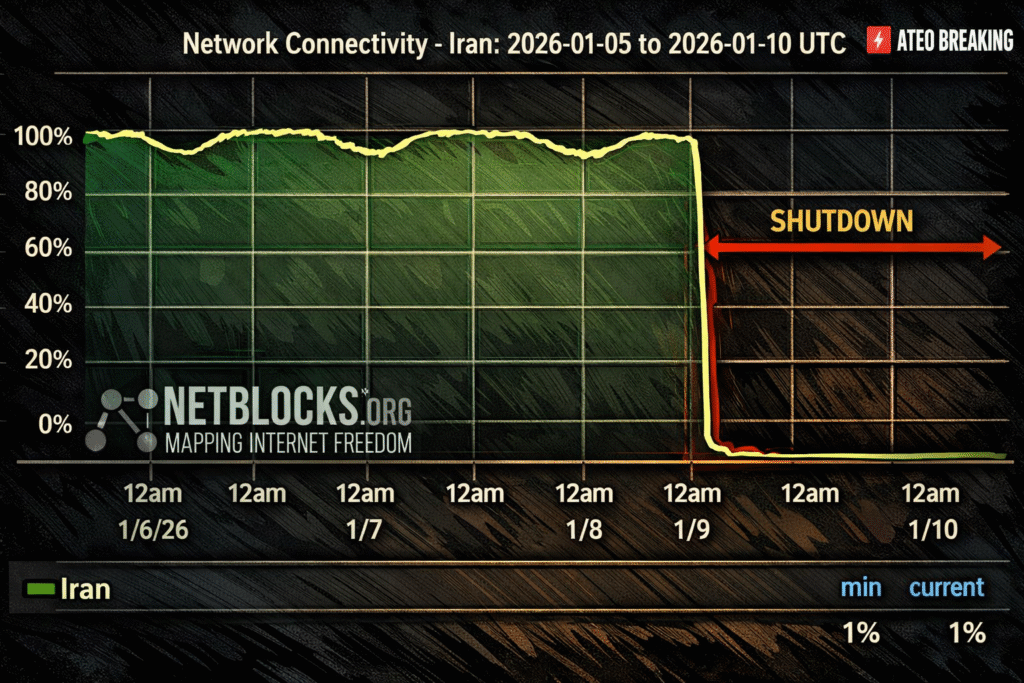
These demonstrations are different from previous ones for several reasons. First, due to their highly concrete economic origins, rooted in the daily lives of small entrepreneurs, which rapidly broadened the movement’s social base. Second, due to their explicitly political and restorationist content, which goes beyond demanding adjustments and directly questions the regime itself. Third, due to the systematic use of social media and external leadership figures as tools of coordination and mobilization, reducing the state’s informational control even amid blockades and restrictions. And finally, due to the intensity of the government’s response, which indicates that the regime perceives the current wave as qualitatively more dangerous than previous ones.
Iran is therefore experiencing a delicate turning point. What began with mobile phones, tariffs, and trade has transformed into a movement that touches the core of political power. Regardless of its immediate outcomes, these demonstrations have already entered history as one of the most serious tests faced by the ayatollahs’ regime in recent decades.






Publicar comentário