Church, Mosque and Museum — The Challenge and History of Hagia Sophia
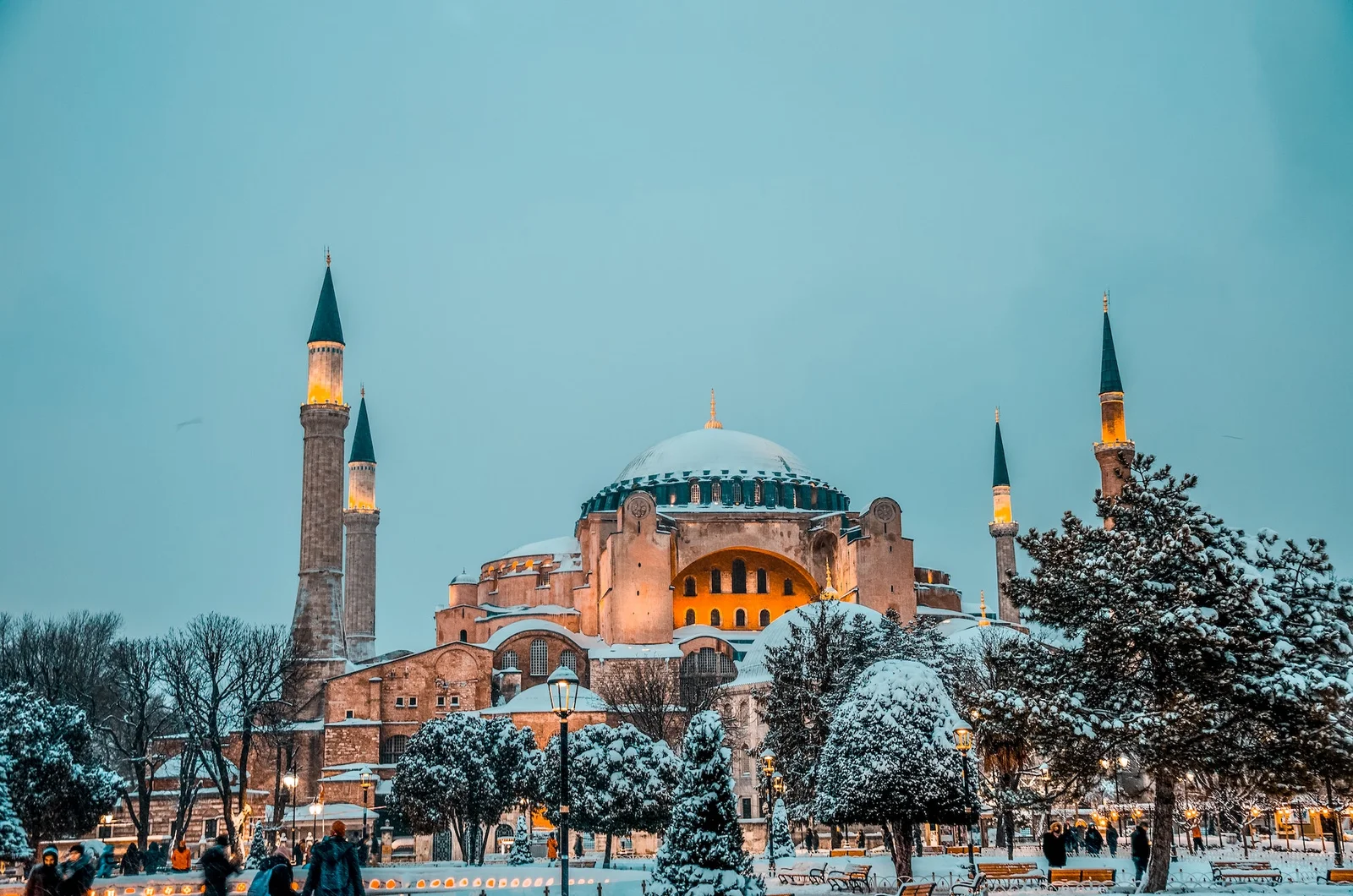
The Hagia Sophia is one of the most important and impressive monuments of Byzantine architecture. It was built in three different stages, reflecting the political, religious, and cultural changes that occurred in Constantinople, the former capital of the Byzantine Empire and present-day Istanbul, Turkey.
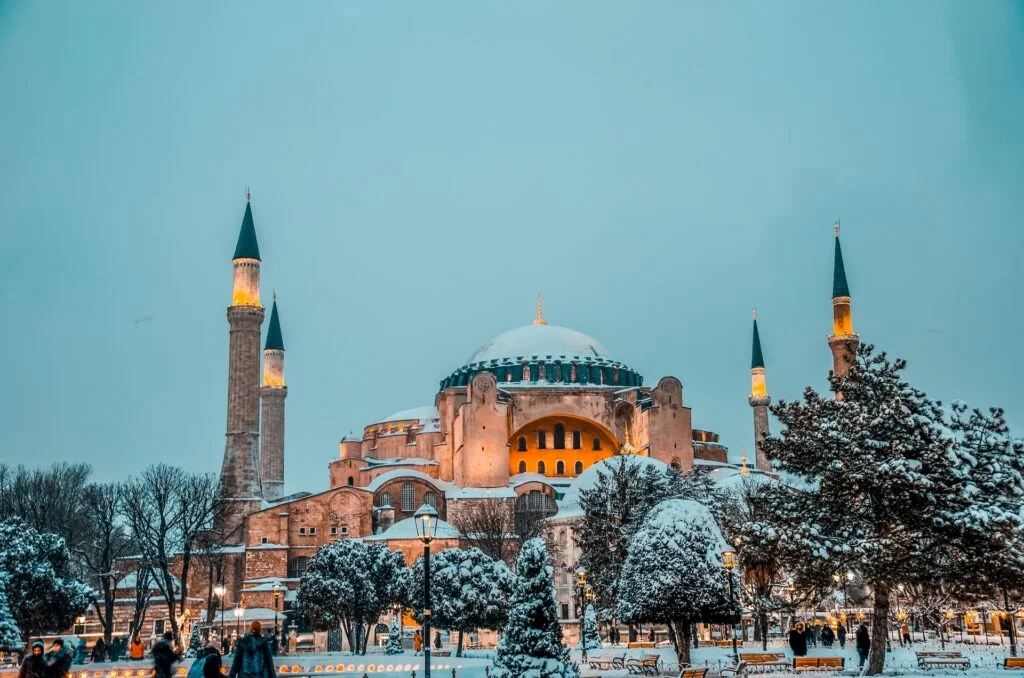
The first church of Hagia Sophia was erected by Emperor Constantius II, son of Constantine I, the city’s founder, in 360 AD. It was called Megale Ekklesia (Great Church) and had a wooden roof. This church was destroyed by fire during a popular revolt in 404 AD.
The second Hagia Sophia church was rebuilt by Emperor Theodosius II in 415 AD. It had five naves and a monumental entrance, but was also covered by a wooden roof. This church was burned down again during the Nika Revolt in 532 AD, which challenged the rule of Emperor Justinian I.
A terceira e atual igreja de Santa Sofia foi encomendada por Justiniano I aos arquitetos Antêmio de Trales e Isidoro de Mileto. Ela foi inaugurada em 537 d.C. e era considerada a maior e mais bela igreja do mundo cristão na época. Ela tinha uma cúpula central de mais de 30 metros de diâmetro e quase 50 metros de altura, sustentada por quatro grandes arcos e uma série de semi-cúpulas e arcadas menores. O interior da igreja era revestido com mármores coloridos, pedras ornamentais e mosaicos dourados.
The third and current Hagia Sophia church was commissioned by Justinian I to the architects Anthemius of Tralles and Isidore of Miletus. It was inaugurated in 537 AD and was considered the largest and most beautiful church in the Christian world at the time. It had a central dome over 30 meters in diameter and almost 50 meters high, supported by four large arches and a series of smaller semi-domes and arcades. The interior of the church was covered with colored marbles, ornamental stones, and gilded mosaics.
A igreja de Santa Sofia foi dedicada à Hagia Sophia, que significa Santa Sabedoria em grego. Ela era a sede do patriarca ortodoxo de Constantinopla e o local das cerimônias imperiais bizantinas. Ela também testemunhou vários eventos históricos, como o saque dos cruzados em 1204, a restauração dos bizantinos em 1261 e a conquista dos otomanos em 1453.
The Hagia Sophia church was dedicated to Hagia Sophia, which means Holy Wisdom in Greek. It was the seat of the Orthodox Patriarch of Constantinople and the site of Byzantine imperial ceremonies. It also witnessed several historical events, such as the Crusader sack in 1204, the Byzantine restoration in 1261, and the Ottoman conquest in 1453.
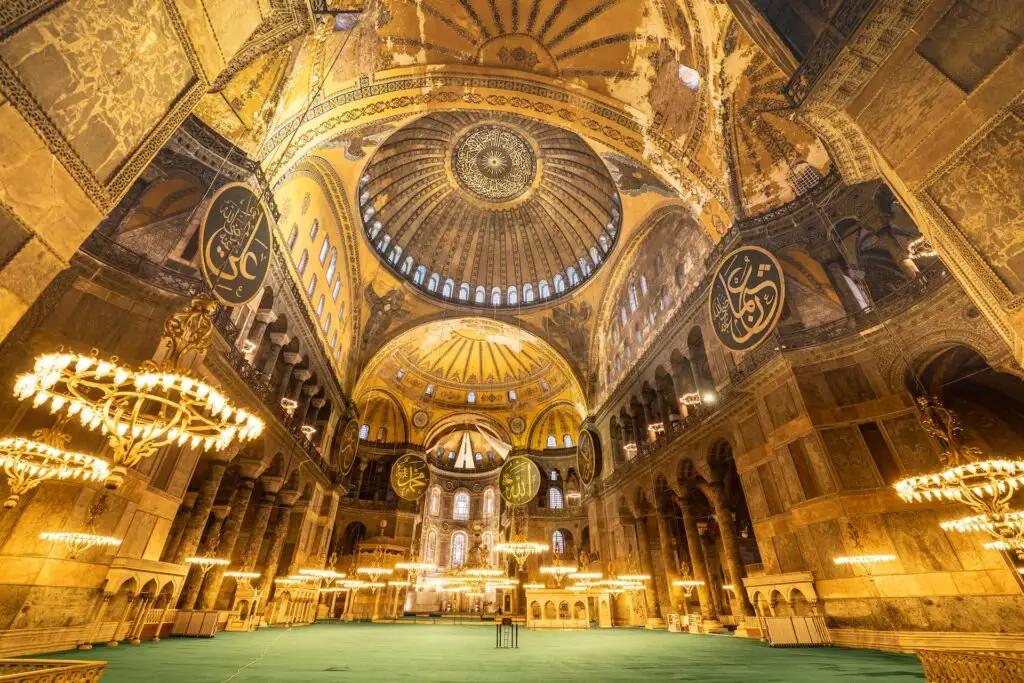
When the Ottomans conquered Constantinople, they transformed the Hagia Sophia church into a mosque. They added four minarets (towers), a mihrab (niche indicating the direction of Mecca), a minbar (pulpit), a madrasa (Islamic school), and several tombs. They also covered or removed some of the Christian mosaics.
The Hagia Sophia Mosque was in operation until 1931, when it was closed for restoration. In 1935, it was reopened as a museum by the President of the Republic of Turkey, Mustafa Kemal Atatürk, who wanted to preserve the city’s cultural heritage. The Hagia Sophia Museum displays both the Christian and Islamic elements of its millennia-long history.
In 2020, the Turkish government decided to revert Hagia Sophia’s status from a museum to a mosque. This decision generated controversy and criticism from various countries and organizations, who believe it violates the universal importance and symbolic value of the monument.
The Hagia Sophia church, mosque, and museum is one of Istanbul’s main tourist attractions and receives millions of visitors every year. It has been recognized as a UNESCO World Heritage Site since 1985.








Publicar comentário