Cuba’s Losses in Caracas: The Hidden Cost of the Operation that Captured Maduro

In the unfolding of the recent U.S. military operation that culminated in the capture of Venezuelan president Nicolás Maduro, one of the most dramatic episodes was the confirmation by the Cuban government that 32 soldiers and agents — including officers from the Cuban Armed Forces and the Ministry of the Interior — were killed during the action in Caracas. The figure was officially released by Havana and reported by several international agencies, which also noted that Cuba decreed two days of national mourning in honor of the victims.
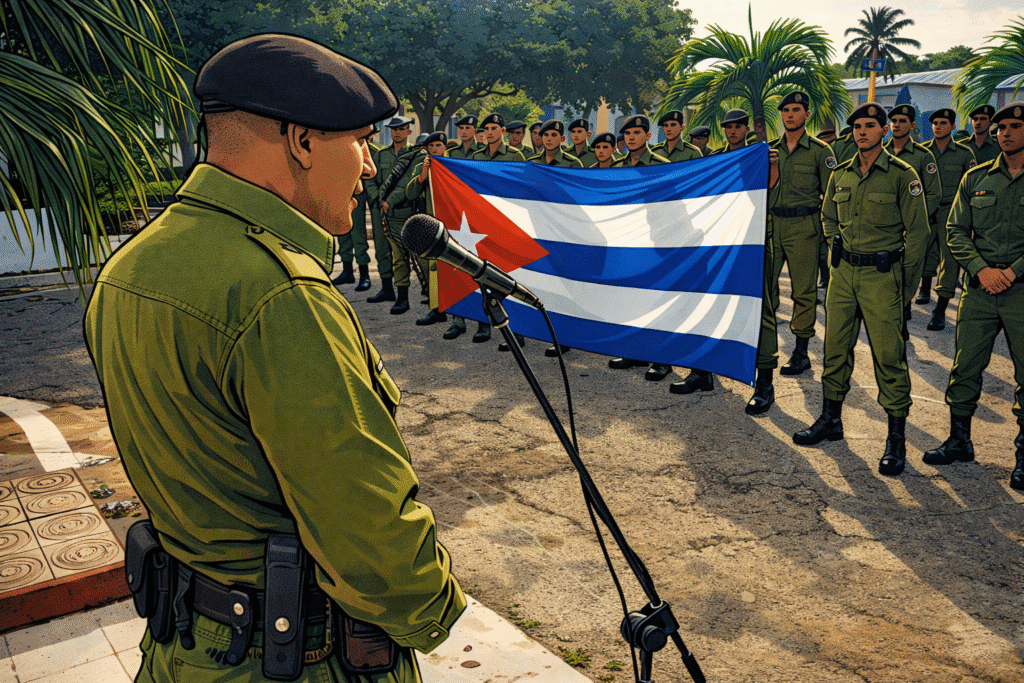
The confirmation of the 32 Cuban casualties — including colonels, lieutenant colonels, and officers of other ranks — was accompanied by the public release of the names of the fallen personnel, many of whom had decades of service. This made explicit the significant presence of Cuban agents integrated into Venezuelan security structures.
Cuba’s Dependence on Chavista Venezuela
The presence of Cuban military personnel and agents on Venezuelan soil is not new or isolated to this recent episode. Since the 2000s, with the alliance between Hugo Chávez and Fidel Castro, Cuba has played a strategic role in Venezuelan security, intelligence, and military training. This involvement deepened as relations between Havana and Caracas intensified, particularly as the Chavista regime faced growing international isolation and economic pressure. Cuba provided not only doctors and infrastructure specialists, but also security officers, deeply embedding itself in sensitive areas of Venezuela’s defense and counter-intelligence apparatus.
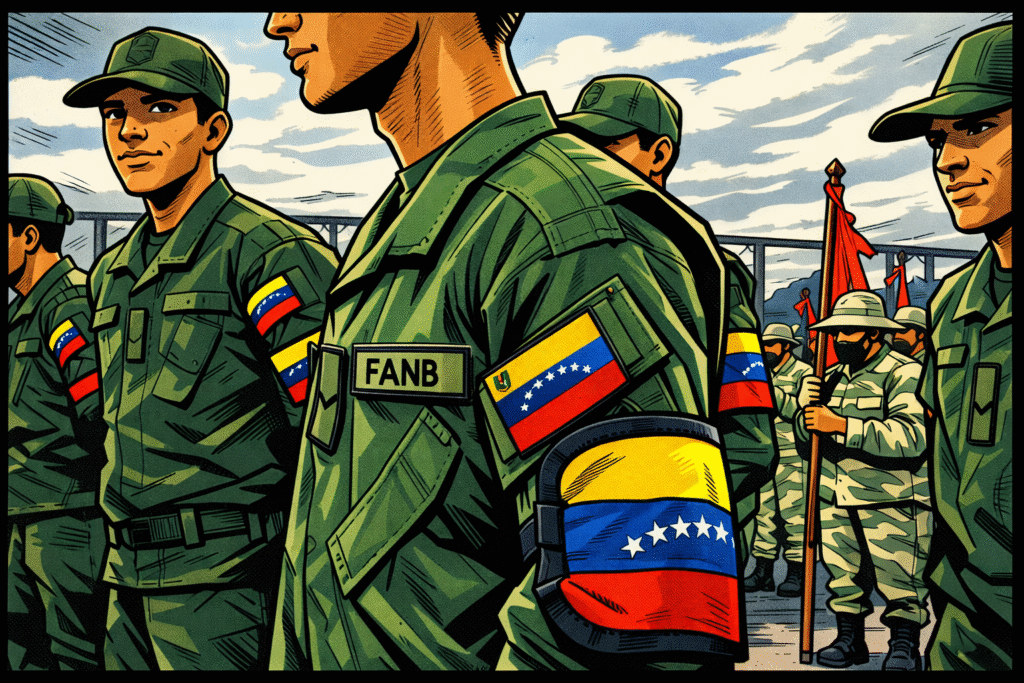
The fact that 32 of these agents died during the operation reflects the high level of access and involvement Cubans had within Chavista power and security structures — something U.S. officials had previously criticized directly, claiming that Maduro’s intelligence services and presidential guard were “full of Cubans.” While Havana viewed this presence as a gesture of solidarity and cooperation between political allies, external critics interpreted it as direct interference in Venezuelan internal affairs.
Official Cuban Reaction
Cuba’s response to the announcement of the losses was immediate and politically charged. The government of Miguel Díaz-Canel classified the American operation as an act of aggression and “state terrorism,” strongly condemning the action that resulted in the deaths of its nationals. The Ministry of the Revolutionary Armed Forces stated that the agents had “fallen heroically” while defending Venezuela, emphasizing the narrative of solidarity between the two states.
The two days of mourning decreed by Havana — with flags flown at half-mast and public activities suspended — reflected the importance the Cuban regime attached to the situation, and also served to reinforce internal cohesion at a time of growing economic and political fragility. Demonstrations of support emerged in several cities, where the population was mobilized to praise the sacrifice of the so-called “internationalist fighters.”
Impact on the Cuban Economy
The end of Maduro’s government — whose capture by the U.S. operation profoundly alters the region’s political dynamics — further complicates Cuba’s already fragile economic situation. The island has historically depended on Venezuela not only for strategic support, but also for energy supply: before the operation, Caracas provided around 30% of the oil consumed in Cuba, which is essential for its economy and for avoiding blackouts and fuel shortages.
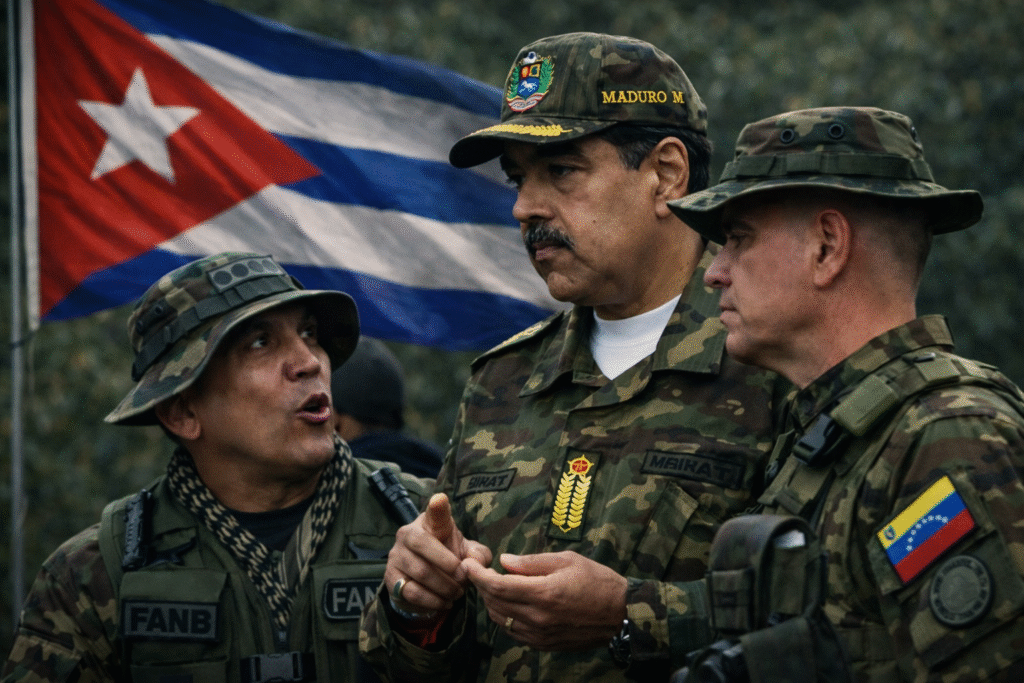
With the interruption of this flow and the political transition in Caracas, specialists interviewed by international agencies warn of an even darker scenario for the Cuban economy, which is already struggling with high inflation, power cuts, and shortages of basic goods. Under this perspective, dependence on Venezuela has become a major vulnerability: without Venezuelan energy support and with strained diplomatic relations with the United States, Havana faces the difficult task of seeking alternatives — which may include closer ties with powers such as China or internal reforms to attract foreign investment — options that are neither simple nor guaranteed.
An Uncertain Future
The loss of 32 Cuban military personnel exposes not only the immediate consequences of a high-impact military operation, but also the deep interdependence between Cuba and Chavista Venezuela, which is now being put to the test. While Havana mourns its dead and reflects on its regional role, Cuban politics and the economy face an increasingly unpredictable future, in which old alliances no longer provide the same guarantees — and in which the search for stability appears as challenging as it now is in Caracas.







Publicar comentário